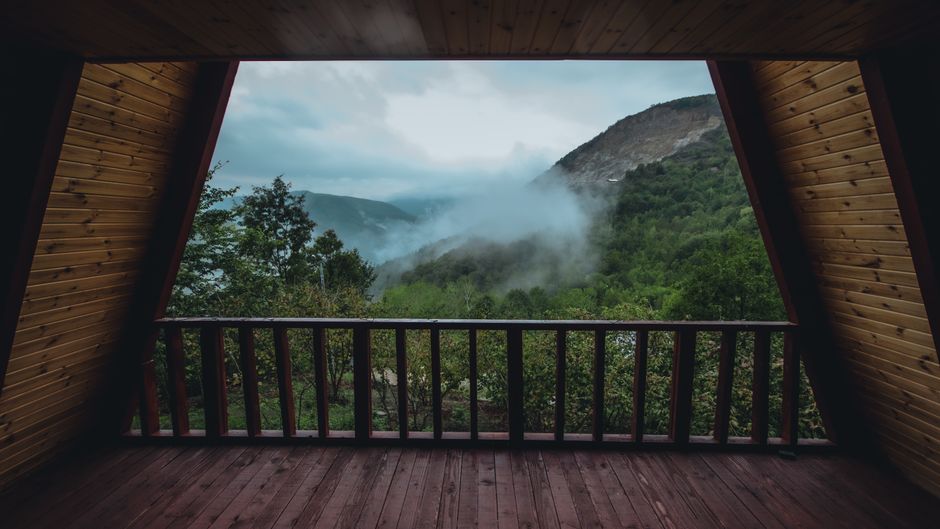
Wood rot and water damage are progressive problems that get more expensive the longer they sit. Here is how to identify the warning signs at your Smoky Mountain cabin.
Decks, stairs, and exterior wood are the parts of a mountain cabin that take the most abuse from weather. Smoky Mountain rainfall, persistent humidity, and freeze-thaw cycles create ideal conditions for wood rot. The problem with rot is that it is progressive. The longer it sits, the more structural damage it causes, and the more expensive the repair becomes.
This guide helps cabin owners and property managers identify the warning signs of deck rot and water damage before they become structural failures. If you find any of the issues described here, professional evaluation is the safest next step.
Common Signs of Wood Rot
Wood rot comes in two forms: dry rot and wet rot. Both are caused by fungi that break down wood fibers, but they look different and spread at different rates.
Dry Rot
Dry rot is the more aggressive form. It can spread through dry wood and even across non-wood surfaces via root-like strands. Signs include: wood that appears darker than surrounding areas, a cracked or cubed appearance (the wood breaks into rectangular chunks), a musty smell, and a brittle, crumbly texture when probed. Dry rot can travel significant distances from the original moisture source, which makes it particularly dangerous in cabin structures.
Wet Rot
Wet rot stays localized to persistently damp wood. Signs include: a soft, spongy feel when pressed, darker staining, visible fungal growth, and a damp smell. Wet rot is slower than dry rot but will eventually compromise structural integrity if the moisture source is not addressed.
- Press a screwdriver into suspicious wood. If it sinks in easily, the wood is rotted
- Look for discoloration: darker patches, black streaks, or white fungal growth
- Check for a spongy or springy feel underfoot when walking the deck
- Sniff for musty or mildew odors. Rot has a distinctive smell
- Look for cubed cracking. Rectangular splits indicate dry rot
- Probe at joints, post bases, and ledger boards. Rot starts where water collects
Moisture Exposure: Where Rot Starts
Rot does not start in the middle of a dry board. It starts where water collects and sits. On a mountain cabin, certain areas are far more vulnerable than others.
Stairs and Stringers
Stair stringers, the diagonal boards that support the steps, are highly vulnerable. They often sit directly on the ground or on concrete pads that wick moisture upward. Check where the stringer contacts the ground; that is where rot typically begins. Also inspect the notch cuts, which expose end grain and absorb water faster than flat surfaces.
Railings and Posts
Railing posts are another common failure point. Water enters at the top of the post where the railing cap meets the post, and at the base where the post meets the deck surface or footing. Grab every railing post and push hard. It should not move. Any lateral movement means the post connection is compromised.
Deck Board Connections
Check where deck boards meet joists. Water pools at screw and nail holes, especially if fasteners have backed out. Look for fasteners that are protruding or rusted. Both indicate movement and moisture.
Ledger Board
The ledger board is the beam that attaches the deck to the cabin. It is one of the most critical structural connections, and one of the most common places for rot. Water gets behind the ledger when flashing is missing, damaged, or improperly installed. If the ledger rots, the entire deck can pull away from the cabin. Look for water staining on the siding behind the ledger and probe the ledger from underneath if accessible.
Water Intrusion Around the Cabin
Deck rot is often a symptom of a broader water management problem at the cabin. If water is finding its way to the deck, it is likely finding its way elsewhere too.
Windows and Doors
Check window and door frames for soft wood, peeling paint, and water stains. Water enters through failed caulk, cracked glazing, or improperly flashed openings. If the sill feels soft when pressed, rot has started beneath the surface.
Roof Penetrations
Look at the ceiling inside the cabin, particularly near plumbing vents, chimneys, and skylights. Water stains on the ceiling or dark streaks on exterior walls near roof valleys indicate water is getting past the roof covering. Roof leaks that go unaddressed lead to rafter rot, which is far more expensive to repair than deck rot.
Gutters and Downspouts
Clogged gutters and misdirected downspouts dump water directly at the cabin foundation and onto deck structures. During a Smoky Mountain downpour, a clogged gutter can send gallons of water cascading over the edge and onto the deck below. Clean gutters at least twice a year and verify downspouts direct water well away from the foundation.
Why Recurring Moisture Must Be Fixed at the Source
Replacing rotted wood without fixing the moisture source guarantees the rot will return. This is the most common, and most costly, mistake cabin owners make. A deck board rots, the board is replaced, and two years later the new board rots in the same spot because the gutter above still overflows in the same place.
Before any wood replacement, identify why the wood got wet in the first place. Is the gutter clogged? Is the downspout dumping water on the deck? Is the ledger flashing failed? Is a plumbing vent leaking? Fix the water source first, then replace the damaged wood.
Note
If you address only the rotted wood and not the moisture source, the repair will fail. Rot will return to the same area, and the structural damage will be worse the second time because the surrounding wood has been continuously exposed.
When Damaged Wood Needs Professional Evaluation
Surface rot on a single deck board is a straightforward replacement. But the following situations require professional evaluation:
- Any rot in the ledger board. This is the connection between the deck and the cabin
- Rot in stair stringers. Failed stringers can collapse under guest weight
- Rot in railing posts. A failed post means the railing cannot support a person leaning on it
- Rot in floor joists or support beams. These are load-bearing structural members
- Dry rot. It spreads aggressively and may extend well beyond what is visible
- Multiple areas of rot. This suggests a systemic moisture problem, not an isolated issue
Safety Warning
A deck with structural rot is a safety hazard. If a guest leans on a rotted railing and it fails, the liability exposure far exceeds the cost of repair. If you find structural rot, restrict deck access until it has been evaluated and repaired.
How Routine Inspections Prevent Expensive Repairs
The difference between a $200 deck board replacement and a $5,000 structural repair is almost always time. Rot that is caught early costs a fraction of rot that is left to spread. A simple quarterly walk-around, probing suspicious areas, checking gutters, and looking for water stains, catches most problems while they are still minor.
For owners who do not live nearby or manage multiple properties, a professional inspection service is the most reliable way to catch rot early. Our cabin repair and inspection services include deck evaluation, moisture source identification, and structural wood replacement.
If you suspect deck rot or water damage at your Smoky Mountain cabin, do not wait for it to spread. Call 865-805-2438 or contact us for a professional inspection. We serve cabin owners in Sevierville, Gatlinburg, Pigeon Forge, and throughout Sevier County.
Need Help With Your Cabin?
We repair hot tubs, HVAC, plumbing, and electrical for rental cabins across Sevier County, TN.